
Project Jazzgame
VEETEE GamesAdventure
4.699.00 Reviews
- Version
- 0.0.498
- Installs
- 500.00K
- Age Rating
- Everyone
Screenshots
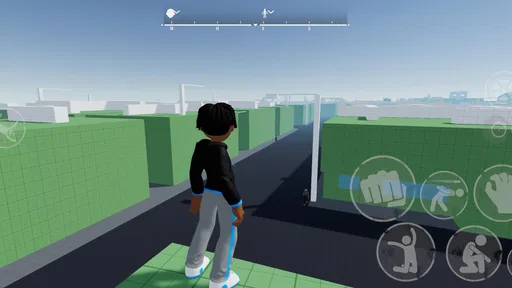
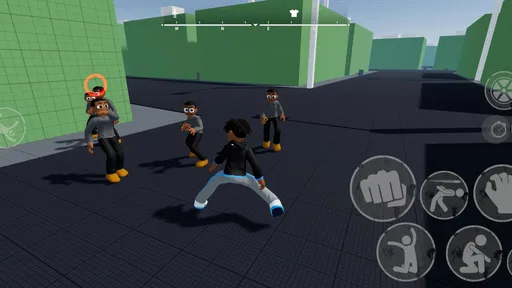
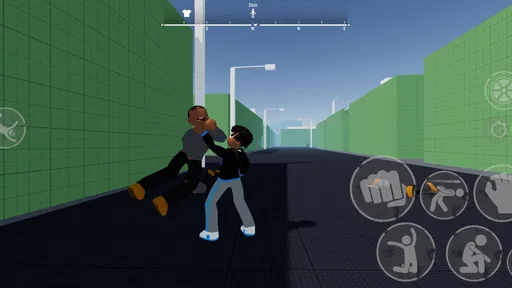
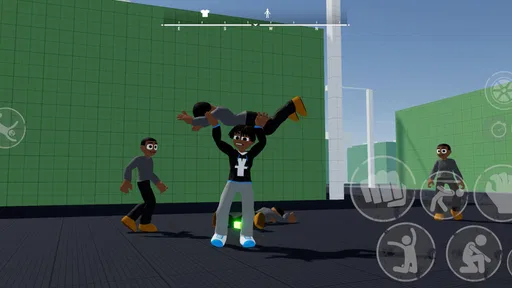
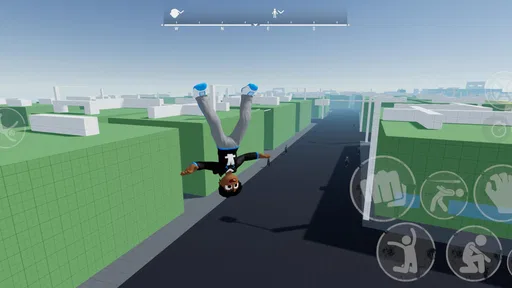
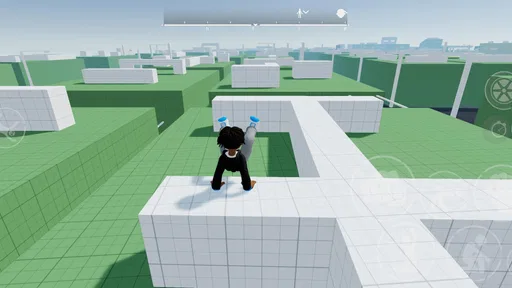
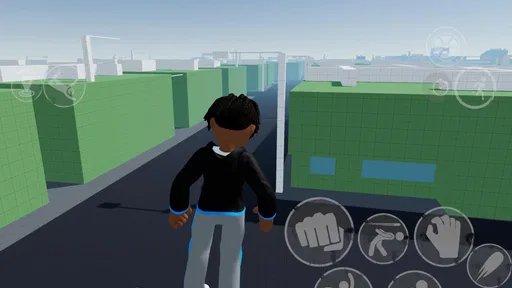
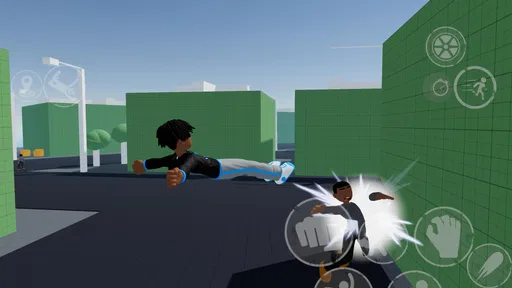
Our Review of Project Jazzgame
 Analysis by Appyee
Project Jazzgame caught my attention because it aims at a combination that can be difficult to balance on mobile: free movement through an open world and direct battles against enemies. I spent time approaching it as both an adventure game and a movement-focused experience, rather than treating it as a simple action title. The result is a game with a clear identity, but also one that feels like it is still finding its final shape.
Developed by VEETEE Games, this free adventure game is available for players whose device runs Android 8.0 or later. It has already passed half a million installs and holds a 4.6 average from roughly 5,500 ratings, which suggests that the basic idea is connecting with a sizeable audience. I can understand why: the central appeal is easy to grasp, yet the open-world format gives you room to decide how you want to move and engage with danger.
The most important thing to understand is that Jazzgame is built around movement first. If you enjoy the feeling of crossing an environment through parkour and then turning that momentum into a fight, it has a more distinctive hook than a conventional mobile adventure. If you are looking for a deeply explained story, a highly polished long-term progression system, or a carefully finished blockbuster-style world, you should approach it with more caution.
How Project Jazzgame feels in its current form
The first few sessions are best spent learning the relationship between navigation and combat. I found that rushing straight toward every enemy misses part of the point. The open-world setting is more enjoyable when I first look at the surrounding space, identify a route, and decide whether a direct approach or a parkour-based path makes more sense. That simple habit makes the game feel less like a sequence of isolated encounters.
Parkour is not just decoration here. It gives movement a practical purpose: reaching a target, escaping pressure, or changing the angle of an encounter. When the controls respond well, moving through the environment feels more expressive than walking from one objective to the next. I especially liked the moments when a route through the world became a small personal challenge rather than an obvious line between two points.
Combat works best when I treat it as part of that movement loop. Instead of standing still and focusing only on attacking, I pay attention to where I am positioned and what space remains available around me. That approach makes even a short battle feel connected to exploration. It also means that players who prefer patient positioning may enjoy the game more than those who expect a purely button-driven action experience.
The game’s presentation is easier to appreciate when I keep its scale in mind. It is a mobile project from VEETEE Games, not a direct replacement for a major console open-world adventure. Comparing it with the largest games in the category would be unfair, but comparing its basic loop with other mobile adventure games is useful. Jazzgame offers a stronger emphasis on free traversal than many mission-led alternatives, while it may feel less immediately structured for someone who wants constant objectives and obvious rewards.
That difference affects the way I recommend it. I would suggest trying it during short sessions when you want to explore and experiment with routes. I would not choose it as my first option for a commute if I wanted a tightly guided game that tells me exactly what to do every minute. Its appeal comes from making some decisions for yourself, and that can feel refreshing or slightly aimless depending on your taste.
Movement is the feature worth learning properly
A useful early strategy is to stop treating parkour as a way to move faster and start treating it as preparation. Before entering a fight, I look for nearby surfaces, open space, and possible escape routes. This changes the rhythm of play: I am not merely reacting after an enemy appears; I am shaping the encounter before it begins. That is a more rewarding use of the open world than simply travelling between markers.
I also recommend resisting the urge to repeat the same route every time. A familiar path can be efficient, but experimenting with alternate movement lines helps reveal whether the environment is offering meaningful choices or only visual decoration. For me, this became a practical way to judge the game’s depth. When a different route changes how safely or quickly I can approach a battle, exploration feels valuable. When it only changes scenery, the journey feels less important.
Another small but useful habit is to separate exploration sessions from progress-focused sessions. When I play with the goal of reaching a particular point, I naturally take fewer risks and use the environment more conservatively. When I play without that pressure, I notice more possibilities in the world. This makes the game easier to enjoy because it prevents every session from becoming a race toward the next confrontation.
These are not complicated techniques, but they are the kind of details that a short store description cannot communicate. The game rewards curiosity more than passive travel, and the player gets more from it by paying attention to space. That is also where its limitations become visible: if the environments do not provide enough meaningful variation for your preferred style, the movement loop can lose some of its freshness.
Combat rewards awareness more than button mashing
My best battles came from keeping room around my character. Crowding myself against an obstacle made encounters feel harder to read, while staying aware of the surrounding area gave me more options. I learned to enter fights with an exit in mind instead of assuming that attacking continuously would solve everything. This is particularly important for players who normally approach mobile action games by tapping through encounters as quickly as possible.
The open-world structure also changes how combat feels compared with a level-based adventure. In a traditional stage-based game, the arena is usually designed around the encounter. Here, the environment is part of the decision. A fight can feel more dynamic when it develops during movement, but it can also feel less controlled. That trade-off is central to the game’s personality.
I would not describe the combat as the only reason to play. Its real value comes from the way it follows exploration. Players who want a dedicated fighting game with extensive combat variety may find the experience too dependent on the surrounding world. On the other hand, anyone who enjoys using movement to create better combat situations may find more satisfaction here than in a standard adventure built around fixed encounters.
For a realistic everyday scenario, imagine having fifteen minutes before leaving home. I would open Jazzgame, spend a few minutes testing a route through the environment, and then take on a nearby enemy encounter rather than starting a long, objective-heavy session. That kind of play suits the game well. It gives me a clear activity without demanding that I commit to a lengthy campaign block.
What the current version tells us about the project
The current version is 0.0.498, and that number matters when setting expectations. It indicates that I am looking at a project with a substantial build history, but not necessarily one that feels like a completely finished, locked-down release. I see that as an invitation to judge the present experience on its own terms rather than assuming every planned idea is already fully realized.
The release date is listed as November 1, 2025, so the game belongs to a relatively recent wave of mobile projects trying to offer broader spaces and more active traversal. That context helps explain why its identity is focused on a simple but ambitious pairing: move freely, then battle what stands in the way. The concept is understandable without a long tutorial, which is a strength when entering a new game.
At the same time, a low version number means existing players should be prepared for an experience that may continue to evolve. I would not install it expecting the same level of refinement as a mature alternative that has spent years polishing every interface, encounter, and progression detail. Jazzgame is more interesting as a developing adventure with a strong central idea than as a finished package that has already answered every design question.
For someone deciding whether to download it, the practical answer is straightforward. It is free to start, carries an Everyone age rating, and supports Android devices from version 8.0 onward. That makes trying it relatively accessible for a broad audience. The free entry point is useful because the game’s movement and combat relationship is something I would rather experience directly than judge from screenshots or a short description.
There are in-app purchases priced from $2.99 to $4.99 per item. I would keep that in mind before recommending it to a younger player or to anyone who wants a completely frictionless free experience. The age rating makes it approachable for general audiences, but the presence of purchases still means that parents and shared-device users should pay attention to how spending is handled.
How it compares with familiar mobile adventure games
Most mobile adventure games make their value obvious through missions, chapters, collectibles, or a visible upgrade path. Those structures help players understand what to do next and why a particular activity matters. Jazzgame takes a less conventional route by putting more weight on the act of moving through an open space and finding your own approach to enemies.
That makes it a better fit than a heavily scripted alternative for players who enjoy improvisation. I can decide whether to explore first, practise movement, or head toward a confrontation. The trade-off is that the game may not provide the same sense of constant direction as a mission-driven adventure. If you need a strong narrative thread to maintain interest, a more structured title may serve you better.
It also differs from pure platform games. In a platformer, the challenge is usually concentrated on precision movement and carefully arranged obstacles. Here, parkour exists inside a broader adventure loop that includes battles. I like that wider context because movement has a reason beyond reaching the next ledge, but players seeking perfectly tuned platforming may prefer a game designed solely around that discipline.
Compared with arena-focused action games, Jazzgame gives the environment more importance. The world is not merely a backdrop for combat; it is part of how I approach combat. That creates a more relaxed, exploratory rhythm, though it may feel less immediately intense than a game that places the player in repeated, tightly designed fights.
Who will enjoy it and who should skip it
I would recommend Project Jazzgame to players who like testing routes, using movement to solve small problems, and entering battles on their own terms. It is especially suitable for someone who wants an adventure game that does not reduce travel to automatic walking between objectives. The free price also makes it a sensible experiment if the blend of open-world exploration and parkour already sounds appealing.
I would be more hesitant to recommend it to players who want a fully polished, story-heavy experience from the first minute. The current version suggests an evolving project, and the game’s strongest ideas are more apparent when I actively engage with them. Someone who prefers a finished, highly guided adventure may find the rougher edges more noticeable than the movement-focused strengths.
It is also not the ideal choice for a player who dislikes combat being connected to exploration. If you want peaceful traversal with little interruption, enemy battles are part of this game’s basic identity. Likewise, if you want a competitive action game built around tightly balanced matches, an open-world adventure is probably the wrong format for your expectations.
Families should also remember that Everyone-rated does not mean every player will have the same experience with spending. Since individual items cost between a few dollars, I would check purchase controls before handing the device to a child. That is a practical step, not a criticism of the game itself, and it is worth doing whenever a free mobile title includes optional purchases.
Practical ways to get more from the game
My first tip is to use the opening sessions as movement practice rather than judging the entire game by how quickly you can defeat enemies. Learn how the environment can help you approach, reposition, and retreat. This gives the parkour system a purpose and makes later encounters easier to understand.
My second tip is to vary your pace. Move quickly when you already know the route, but slow down when entering unfamiliar areas. A hurried approach can turn a manageable encounter into a cramped one, while a brief look around often reveals a better way to engage. This is a small change, yet it makes the game feel more deliberate.
Third, use short sessions to test one question at a time. One session can focus on whether you enjoy exploring without a strict objective. Another can focus on how much you like combining movement and combat. This is more useful than playing for an hour while forming a vague impression, because the game’s appeal depends on the relationship between those systems.
Finally, decide early whether you are comfortable with the purchase model. Because the game is free to download but includes individual purchases, I would avoid making a spending decision during a rushed session. First establish whether the core movement loop is enjoyable without buying anything. That keeps the choice based on your experience rather than on impatience.
What I would watch as the project develops
The main thing I want to see is how VEETEE Games expands the relationship between traversal and combat. More content alone would not necessarily improve the game. The most valuable progress would be environments that give parkour meaningful tactical uses, encounters that respond naturally to movement, and a clearer reason to revisit areas after the first exploration.
I would also watch how the game handles guidance. Open-world freedom is attractive, but players still need enough direction to understand what makes a route or encounter worthwhile. The strongest future development would preserve the freedom while making the player’s choices feel more consequential, rather than simply adding more space to cross.
Polish will matter as well. With version 0.0.498, I see a foundation that is easy to describe but still open to refinement. Better clarity around objectives, smoother transitions, and a more consistent sense of progression would help the game appeal beyond movement enthusiasts. Those are areas where a developing project can make a large difference without abandoning its original identity.
I would not treat future possibilities as promises, though. My recommendation is based on what the current game offers: an accessible adventure built around open exploration, parkour, and enemy battles. The listed rating of 4.6 from about 5,500 ratings and more than 500,000 installs show that many players are willing to give the idea a chance, but those figures should not replace your own expectations about polish and structure.
After playing it, I see Project Jazzgame as a worthwhile free download for curious mobile players who want something more active than a standard waypoint-based adventure. Its best moments come when I use the world intelligently, choose my route, and let movement influence the fight that follows. Its weaker side appears when I expect the depth and finish of a long-established premium-style game.
My final recommendation is to try it if the phrase “parkour through an open world, then battle enemies” genuinely appeals to you. Give the movement system time, judge the game through several short sessions, and keep the in-app purchases in mind. For players who value freedom of approach over a heavily scripted adventure, it is an intriguing project worth watching. For everyone else, especially those seeking a complete and tightly directed experience, a more mature alternative may be the better choice right now.
Verdict
Strengths of Project Jazzgame
- Simple controls make it easy to start playing quickly.
- Jazz-inspired presentation gives the game a distinctive atmosphere.
- Short sessions suit casual play during spare moments.
- Lightweight gameplay is suitable for a wide range of mobile devices.
- Progression provides a reason to return and improve your results.
Limitations of Project Jazzgame
- The gameplay may feel repetitive after extended sessions.
- Limited content can reduce its long-term appeal for dedicated players.
- Difficulty balance may not suit users seeking a deeper challenge.
- Some features may require patience or repeated play to unlock.
- The experience may feel less engaging without headphones or sound.
Similar Picks in This Category
View All
Roblox
Roblox Corporation4.2

Pokémon GO
Niantic, Inc.3.5

Ninja warrior: legend of adven
TOH Games4.6

Ninja Arashi
Black Panther4.6

Eyes - The Horror Game
Fearless Games sp. j.4.5

Critical Action:Gun Strike Ops
FPS Shooter & Action Game4.3
Frequently Asked Questions
What is Project Jazzgame, and what kind of experience does it offer?
Project Jazzgame is presented as a music-focused game built around jazz-inspired gameplay, rhythm, and interactive challenges. Before downloading, users should understand that the exact experience may depend on the available version, device, and updates. It is best suited to players who enjoy musical timing, experimentation, and a more distinctive atmosphere than traditional action or puzzle games.
Is Project Jazzgame free to download and play?
Project Jazzgame may be available as a free download, but users should check the official store listing for the current pricing model before installing it. Some versions of mobile games include optional purchases, advertisements, unlockable content, or premium features. Reviewing the in-app purchase information and payment requirements is recommended, especially if children will be using the device.
Does Project Jazzgame require an internet connection?
The connection requirements can vary depending on the version of Project Jazzgame and the features being used. Core gameplay may work offline if the app has already downloaded its necessary files, while updates, online services, account synchronization, rankings, or additional content may require internet access. Check the store description and test the game after installation before relying on offline play.
Which devices are compatible with Project Jazzgame?
Compatibility depends on the operating system, device model, available storage, and the minimum software version supported by the developer. Before downloading Project Jazzgame, users should open the official Google Play or App Store page and confirm that their phone or tablet meets the listed requirements. Older devices may experience longer loading times, reduced performance, or unsupported features.
Is Project Jazzgame suitable for children and casual players?
Project Jazzgame can appeal to casual players and anyone interested in music-based interactive entertainment, but suitability depends on its current content, difficulty, advertising, and purchase options. Parents should review the official age rating, privacy details, and permission requests before allowing children to play. Players who dislike rhythm-based timing or repeated practice may find some challenges demanding.
Play our best games!


